The University of British Columbia
UBC - A Place of Mind
The University of British Columbia
Introduction to Latin American Studies
  • Home
  • About
  • Schedule
  • Videos
    • Lecture Videos
    • Behind the Scenes Videos
    • Interview Videos
    • Student Videos
  • Blogs
  • Concepts
  • Assessment
  • Playlist
  • Contact
Home / neoliberalism

Tags

Argentina Bolívar Brazil casta paintings caudillos Chile Chávez Citizenship colonialism colonization Columbus communism Cuba democracy Diaz emancipation Evita feminism Guatemala history independence introductions latin america liberalism Mexico modernity Peru Perón politics populism Porfirio Díaz Power race racism radio Research Assignment revolution rights slavery Terror Uncategorized United States USA Venezuela violence

neoliberalism

13. Towards an Uncertain Future

13. Towards an Uncertain Future

week 13 lecture (video)

Posted in Featured Articles and Videos, Lecture Videos, Week 13 Lecture | Tagged with Bolivia, C20th, C21st, constituent power, Corruption, Ecuador, left turns, neoliberalism, resistance, state

Week 12 – Speaking Truth to Power

This week was a heavily packed one with lots of things to think about. Here’s a couple points I found…

Posted in Blogs, Week 12 | Tagged with Chile, El Caracazo, media, neoliberalism, populism

Music, Protests and Neoliberalism

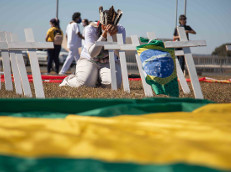
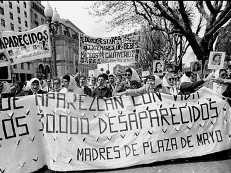
Through this week’s reading and videos, it was very powerful to see how las madres de plaza de mayo used…

Posted in Blogs, Week 12 | Tagged with Amapá, Argentina, Brazil, Cálice, Cancíon Sin Miedo, Chico Buarque, dictatorship, femicide, Guatemala, Las Madres de Plaza de Mayo, Mexico, Music, neoliberalism, Protest, racism, Vidas Negras Importam

Dictatorship and Resistance

Dictatorship and Resistance

A conversation with Rita De Grandis (video)

Posted in Interview Videos, Week 12 Videos | Tagged with Argentina, C20th, democracy, dictatorship, gender, neoliberalism, resistance, Rita De Grandis, violence, women

Lost Decades

Lost Decades

Alec Dawson on neoliberalism (podcast)

Posted in Podcasts, Week 12 Podcasts | Tagged with 1980s, neoliberalism

11. The Terror

11. The Terror

Week 11 lecture (video)

Posted in Lecture Videos, Week 11 Lecture | Tagged with C20th, Che Guevara, Dirty Wars, memory, narrative, neoliberalism, state, testimonio, violence

Week Nine: America

I learned a lot about the United States presence in Guatemala growing up. I think there is something especially consumable about a war waged based on fruit. While I appreciate Dawson’s use of this example, I think that it obscures and takes place of ot…

Posted in Blogs, Week 9 | Tagged with America, bananas, neoliberalism

Week Nine: America

I learned a lot about the United States presence in Guatemala growing up. I think there is something especially consumable about a war waged based on fruit. While I appreciate Dawson’s use of this example, I think that it obscures and takes place of other extremely violent forms of United States interventionism. The Cold War resulted in some of the most despicable maneuvers that are often left untouched in Latin American history courses such as the heavy involvement in the Sandanista movement. I wish that textbooks and more accessible literature widened their scope of example. Nicaragua is one of the most compelling revolutions in my opinion just from the massive female involvement in creating a new government. In reading about the United Fruit Company, I remembered a Pablo Neruda poem titled “United Fruit Co.”

When the trumpet sounded
everything was prepared on earth,
and Jehovah gave the world
to Coca-Cola Inc., Anaconda,
Ford Motors, and other corporations.
The United Fruit Company
reserved for itself the most juicy
piece, the central coast of my world,
the delicate waist of America.
It rebaptized these countries
Banana Republics,
and over the sleeping dead,
over the unquiet heroes
who won greatness,
liberty, and banners,
it established an opera buffa:
it abolished free will,
gave out imperial crowns, encouraged envy, attracted
the dictatorship of flies:
Trujillo flies, Tachos flies
Carias flies, Martinez flies,
Ubico flies, flies sticky with
submissive blood and marmalade,
drunken flies that buzz over
the tombs of the people,
circus flies, wise flies
expert at tyranny.
With the bloodthirsty flies
came the Fruit Company,
amassed coffee and fruit
in ships which put to sea like
overloaded trays with the treasures
from our sunken lands.
Meanwhile, the Indians fall
into the sugared depths of the
harbors and are buried in the
morning mists;
a corpse rolls, a thing without
name, a discarded number,
a bunch of rotten fruit
thrown on the garbage heap.
I think Neruda’s poem is extremely powerful and effective at communicating the issues with United States interventionism. He manages to address multiple layered issues, specifically how entire countries were rebranded as Banana Republics. At the same time, the indigenous were on the receiving end of violence that exploited their labor for fruit. Bodies become synonymous with rotten fruit being discarded without much thought. The poem reminds me a bit about the struggle surrounding the Panama Canal where so many lives were lost for material gain. Neruda captivates by eloquently capturing the greed of these companies in imagery of the rich fruit and “sunken lands.”
It is really interesting to see how Latin American artists use surrounding political issues to form their art. I hope that we get to look into magical realism and poetry as an aspect of Latin American culture.
Posted in Blogs, Week 9 | Tagged with America, bananas, neoliberalism

Week Nine: America

I learned a lot about the United States presence in Guatemala growing up. I think there is something especially consumable about a war waged based on fruit. While I appreciate Dawson’s use of this example, I think that it obscures and takes place of ot…

Posted in Blogs, Week 9 | Tagged with America, bananas, neoliberalism

Week Eight: To Roosevelt.

This week I wanted to really analyze “To Roosevelt” as many of its references seemed rich although I couldn’t understand them all. The first two lines seem to mean that the United States only responds to certain forms of political discourse; countries that share similar religious and political values are allowed into the political arena. Darío points out that much of the American identity is rooted in old colonial figures like George Washington, as Mexico often participates in a similar worship of dead political figures. This necro nationalism permeates both country’s identities. Nebuchadnezzar is both a biblical reference but also a greater homage to hegemonic powers. The Babylonian king had expansive control and influence over the area; similar to the way that the United States’ influence reached the entire world. Darío reprimands to the United States as too quick to use violence because they believe the “future is wherever your bullet strikes.” This ideology is similar today, where the U.S. often uses brute force in the quest to spread democracy.
The “cult of Mammon” describes the sin of gluttony. Together with the cult of Hercules, the United States is painted as a gluttonous and strong country, perpetually conflicted with the ideals of Liberty which the country was founded upon. The poet indicates that Latin America has a different relationship to land; the difference between the United States and Latin America is the stars, light, fragrance, and fire. There is an insinuation that the United States’ indigenous history has experienced heavy erasure as no names are remembered in comparison to Cuautéhmoc and Moctezuma. Instead, Americans have “Saxon eyes,” or germanic roots indicating the lack of personal relationship and identity to Northern America. He finishes the poems with lions in stark contrast to the tigers that the United States metaphorically kills. Latin America is painted as more in touch with emotion, dreams, land, and religion. The land is alive, given human physical characteristics like a backbone. The land too has agency, responding to the actions of the United States. By ending with God, morality is the final blow to the U.S. While the United States is largely religious, they are not unified by one religion. The tone of the poem is romantic, and while seeks to position Latin America as culturally unique, mobilizes largely biblical metaphors, an interesting irony.

I really enjoyed the poem. As an American, I agree with a lot of the arguments that United States action is often violent and in the name of something bigger. More fundamentally, I find the writing quite beautiful.

Posted in Blogs, Week 8 | Tagged with development, Mexico, neoliberalism, Porfirio Díaz, United States

  • 1
  • 2
  • 3
  • Next
Creative Commons License
Except where otherwise noted, this website is licensed under a Creative Commons Attribution NonCommercial 4.0 International License.
Latin American Studies
Faculty of Arts
Vancouver, BC Canada V6T 1Z2
Website las.arts.ubc.ca
Email las.program@ubc.ca
Find us on
   
Back to top
The University of British Columbia
  • Emergency Procedures |
  • Terms of Use |
  • Copyright |
  • Accessibility